

The debate between electric power and combustion engines completely defines modern motocross.For decades, the traditional 450cc four stroke gas bike has ruled the tracks, supercross stadiums, and trail systems across the United States.Iconic machines like the Yamaha YZ450F, Honda CRF450R, and KTM 450 SX-F have set the golden standard for pure performance and racing heritage.Now, the Stark Varg has arrived to challenge that decades old supremacy.It promises massive power output, drastically reduced maintenance, and zero tailpipe emissions.This comprehensive guide breaks down how the electric powerhouse compares directly to traditional gas machines.We will explore power delivery, handling dynamics, maintenance costs, and real world track performance.
Raw Power Showdown: Stark Varg vs 450cc Gas Engines
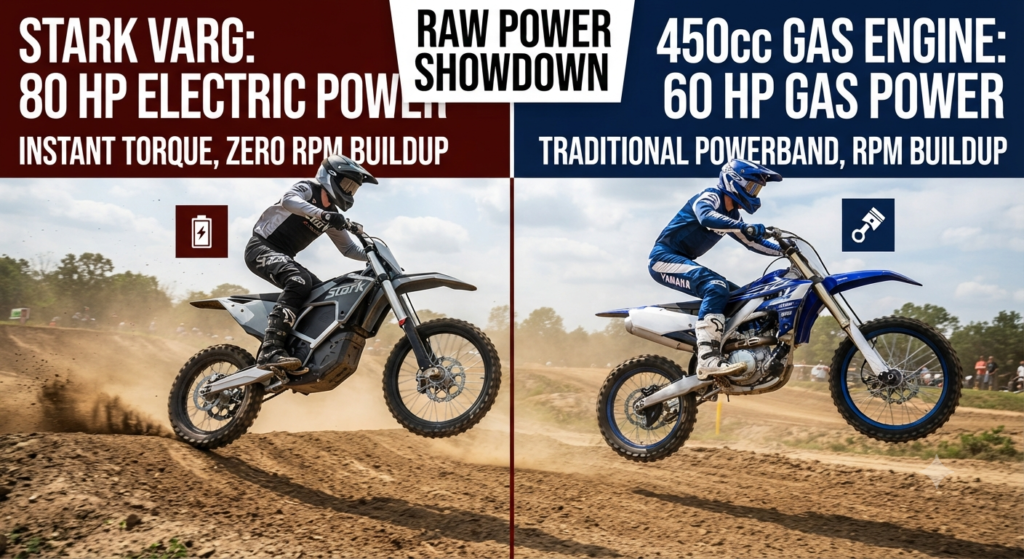
Power figures dictate how aggressively a dirt bike performs right off the starting gate.Traditional 450cc gas bikes typically produce between 53 and 60 horsepower depending on the specific brand and engine tuning.That level of power is more than enough to lift the front wheel at a moment notice and clear massive double jumps.The Stark Varg shatters traditional expectations by delivering up to an incredible 80 horsepower in its full power mode.You can easily dial down this massive power using a smartphone dashboard to match your exact riding skill level or track conditions.Torque delivery creates an even starker contrast between the two technologies.Gas bikes need to rev up through the powerband to reach their peak torque window.The electric motor of the Varg delivers instant torque the exact millisecond you twist the throttle.There is zero clutch delay, zero hesitation, and zero waiting for the engine to catch up.
Agility and Handling: Beating Gyroscopic Inertia
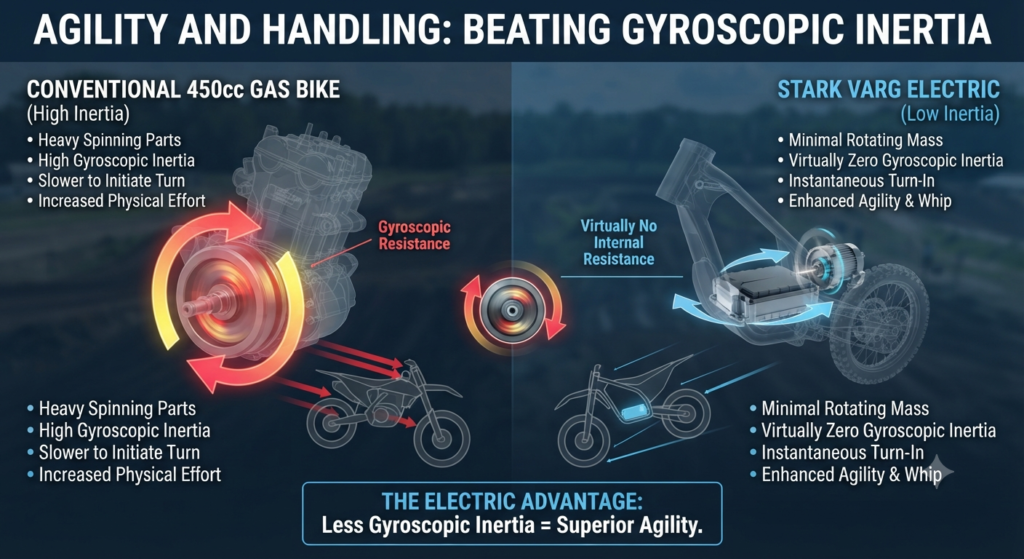
Weight plays a massive role in how a dirt bike feels through tight turns and rough braking bumps.The Stark Varg weighs roughly 260 pounds.This puts it right in the exact same weight class as modern 450cc four stroke gas motorcycles.However, the handling feels entirely different out on the track.Gas engines rely heavily on a spinning crankshaft, heavy flywheel, and complex clutch assembly.These spinning internal parts create massive gyroscopic inertia that resists changing direction mid air or deep in corners.Because the Varg lacks these heavy rotating internal parts, it has virtually no gyroscopic resistance.The chassis feels noticeably lighter, significantly more agile, and much easier to whip over jumps.Riders can also choose between a traditional foot rear brake or a handlebar rear brake setup to match their background.
Garage Reality: Zero Maintenance vs Endless Wrenching
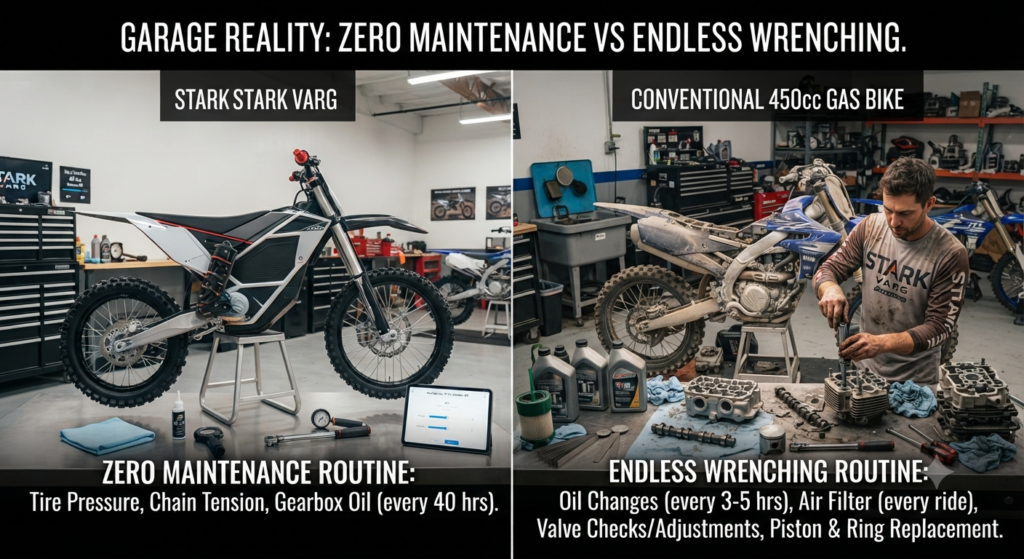
Ask any 450cc gas bike owner about their typical garage maintenance routine.They will tell you about frequent oil changes every three to five hours of riding time.They will mention cleaning and oiling air filters after every dusty ride and paying for expensive valve clearance checks.Pistons, rings, and timing chains also need regular replacement to prevent catastrophic engine failure during a ride.The Stark Varg completely rewrites the maintenance playbook.You never have to worry about replacing pistons, adjusting valves, or packing exhaust silencers.Upkeep is strictly limited to checking tire pressure, inspecting chain tension, and changing the gearbox oil every 40 hours of riding time.This dramatic reduction in maintenance saves both considerable time and hundreds of dollars in replacement parts over the life of the machine.
US Track Logistics: Range Anxiety and Charging Realities
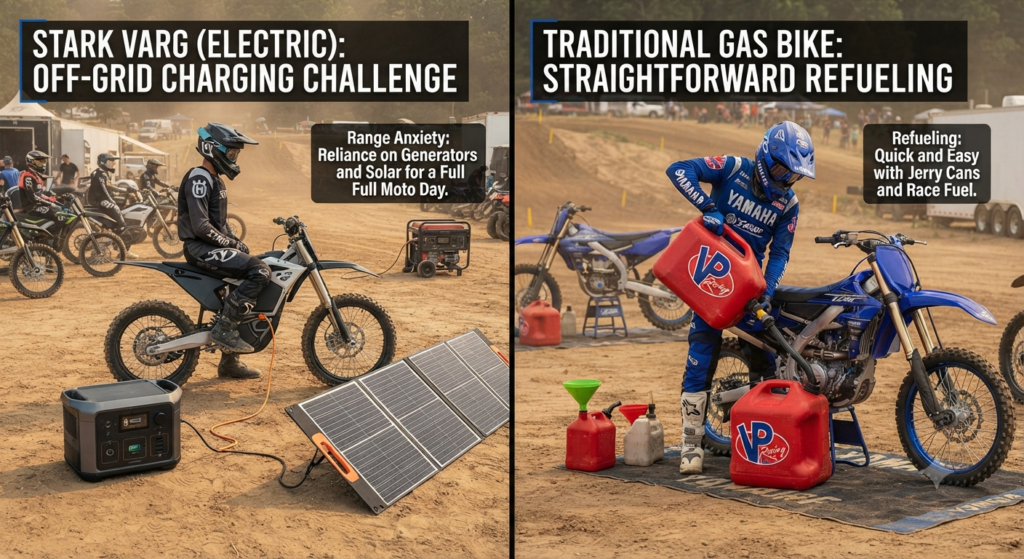
Range anxiety remains a major topic of discussion across American motocross forums and online communities.Powered by a robust battery pack, the Varg easily handles a full speed professional moto or three to six hours of casual trail riding.The exact runtime depends entirely on which power map you select on your handlebar switch or dashboard.Charging the bike at home is as simple as plugging it into a standard wall outlet in your garage.The real challenge arises when you visit remote US motocross tracks that lack standard electrical grid hookups.Riders must rely on portable generators or solar charging setups in the pits to keep riding all day.Traditional gas bikes simply require a Jerry can filled with fresh race fuel, making fuel stops quick and straightforward during a long day at the track.