

The budget electric dirt bike market moved fast this year. A few names from older buying guides are harder to find in stock, and a new wave of mid-drive and high-torque models pushed prices down while power went up. Here is the refreshed lineup for 2026, all confirmed available under $4000 at time of writing.
1. Happy run G300 Pro ($2,499)
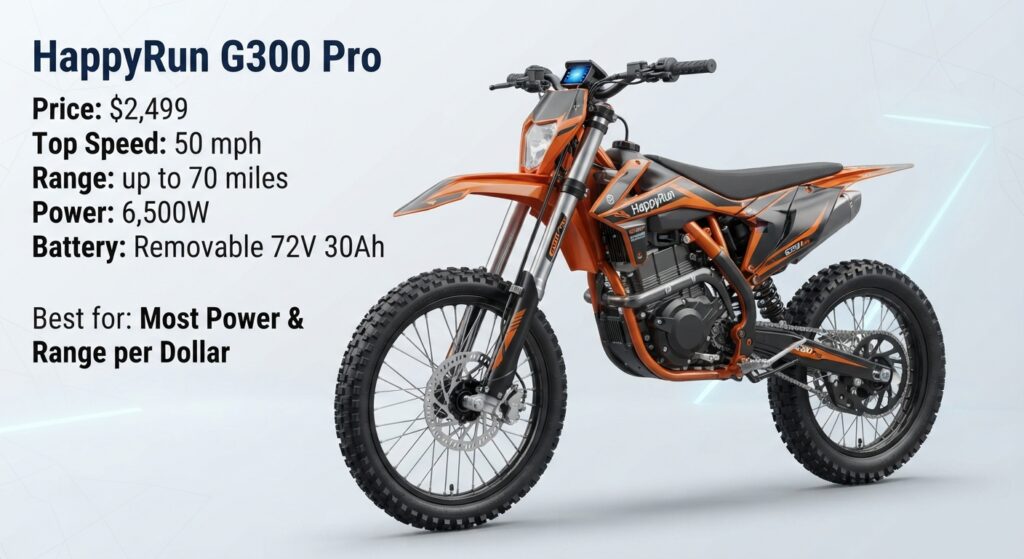
- Peak power: 6,500W
- Battery: 72V 30Ah removable lithium pack
- Top speed: 50 mph
- Range: up to 70 miles
- Best for: riders who want the most power and range per dollar
The G300 Pro is the easy pick for most first-time buyers. It undercuts most rivals on price while still hitting 50 mph and a real-world 70 mile range, and the removable battery makes charging far less annoying if you do not have a garage outlet nearby.
2. 79Bike Falcon Pro ($3,999)
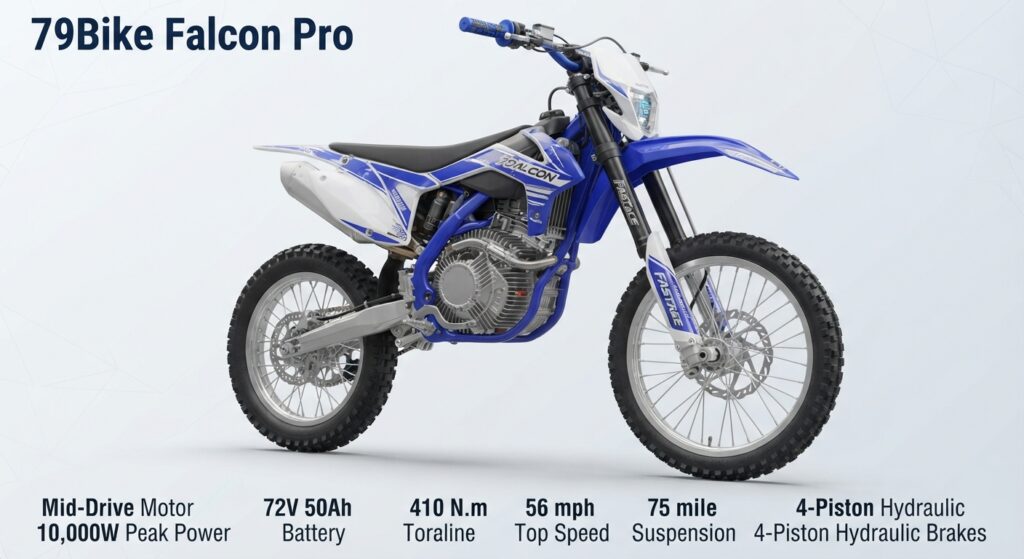
- Rated power: 72V 5000W, peak 10,000W
- Torque: 410 N.m
- Motor position: mid-drive
- Brakes: 4-piston hydraulic, 203mm rotors
- Top speed: 56 mph
- Range: 75 miles
- Suspension: Fastace, 200mm front, 85mm rear
- Charging time: 3.5 hours
This is the closest thing to a Sur-Ron Ultra Bee experience at almost half the price. The mid-drive layout and 410 N.m of torque put it ahead of every rear-hub bike on this list for hill climbs and technical trails. Fast 3.5 hour charging is a genuine bonus for weekend riders.
3. Talaria Sting R (from around $3,099)
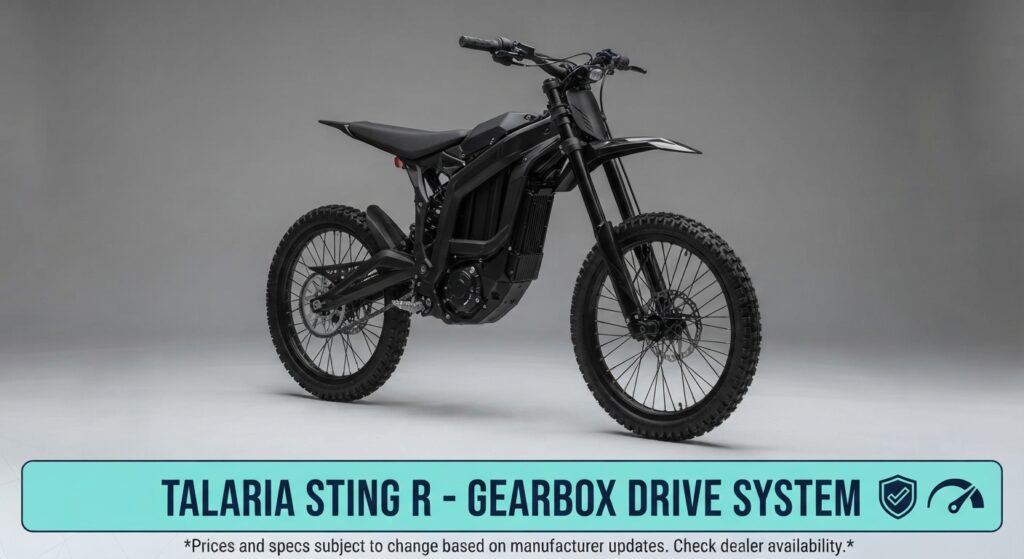
- Peak power: 8kW
- Torque: 45 N.m
- Drive system: gearbox, not belt
- Top speed: around 60 mph
- Acceleration: 0 to 30 mph in 2.36 seconds
- Range: around 19 miles per charge
The Sting R still earns its spot because of the gearbox drive. Belt drives on cheaper bikes stretch and slip over time, and the Sting R avoids that problem entirely. Range is the tradeoff here, so plan shorter loops or carry a spare battery.
4. COSWHEEL R19 ($2,599)
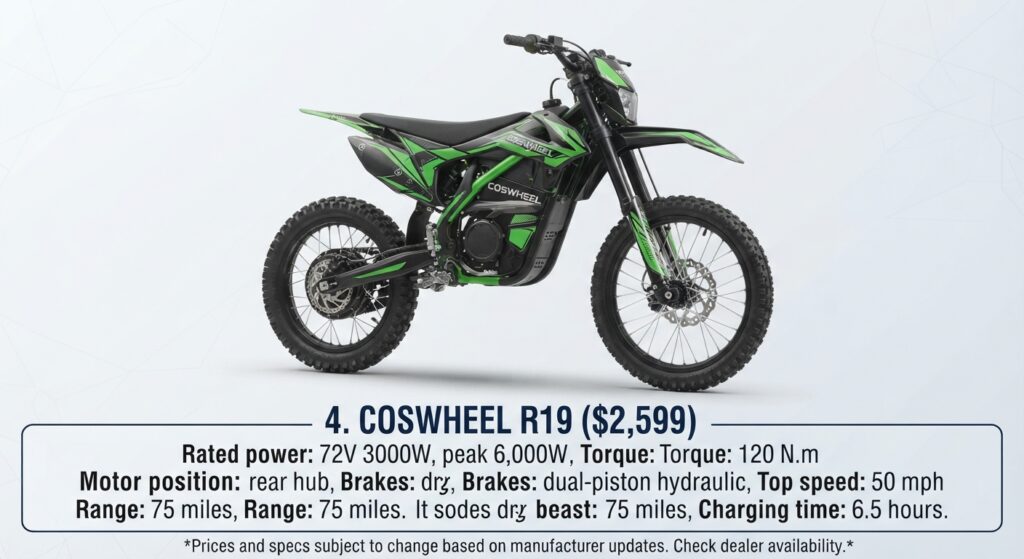
- Rated power: 72V 3000W, peak 6,000W
- Torque: 120 N.m
- Motor position: rear hub
- Brakes: dual-piston hydraulic
- Top speed: 50 mph
- Range: 75 miles
- Charging time: 6.5 hours
A strong middle-ground choice. The R19 matches the pricier bikes on range and top speed while staying well under budget, which makes it a smart pick for riders who want long trail days without the mid-drive price tag.
5. EKX X21 MAX ($2,199)
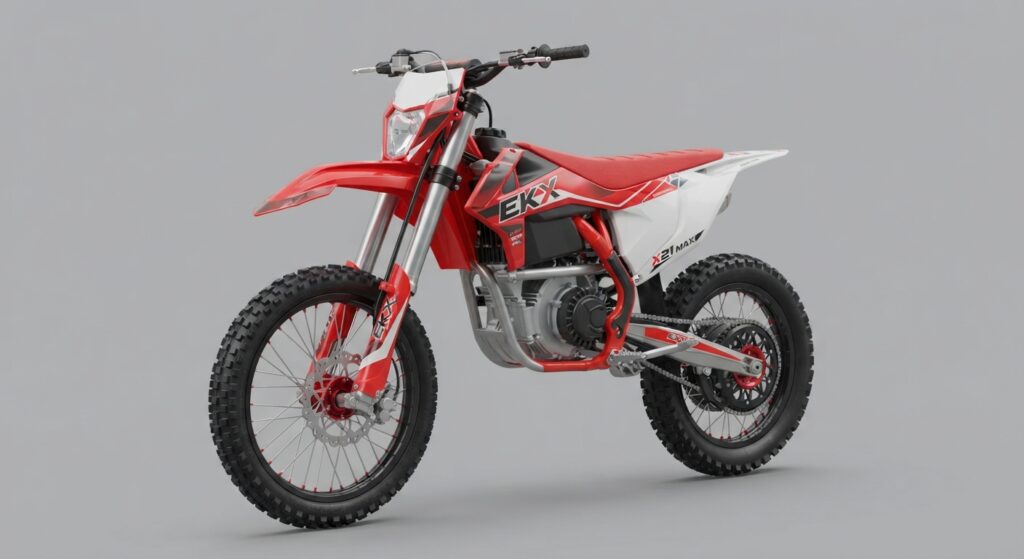
- Rated power: 60V 3000W, peak 6,000W
- Torque: 113 N.m
- Motor position: rear hub
- Brakes: dual-piston hydraulic
- Top speed: 45 mph
- Range: 56 miles
- Charging time: 8 to 10 hours
The value pick of the group. It will not out-drag the mid-drive bikes on this list, but for casual trail riding and learning the basics, it delivers real off-road capability for the lowest price here.
Note on discontinued models: several bikes that used to appear in “under $4000” roundups, including older Sur-Ron Light Bee X trims and early Talaria Sting base models, have since crept above $4000 or gone out of production as manufacturers shifted to higher-spec versions. The five bikes above are current 2026 production models confirmed to sell under that price cap.
FAQ: Common Problems, Controller Issues, and Battery Safety
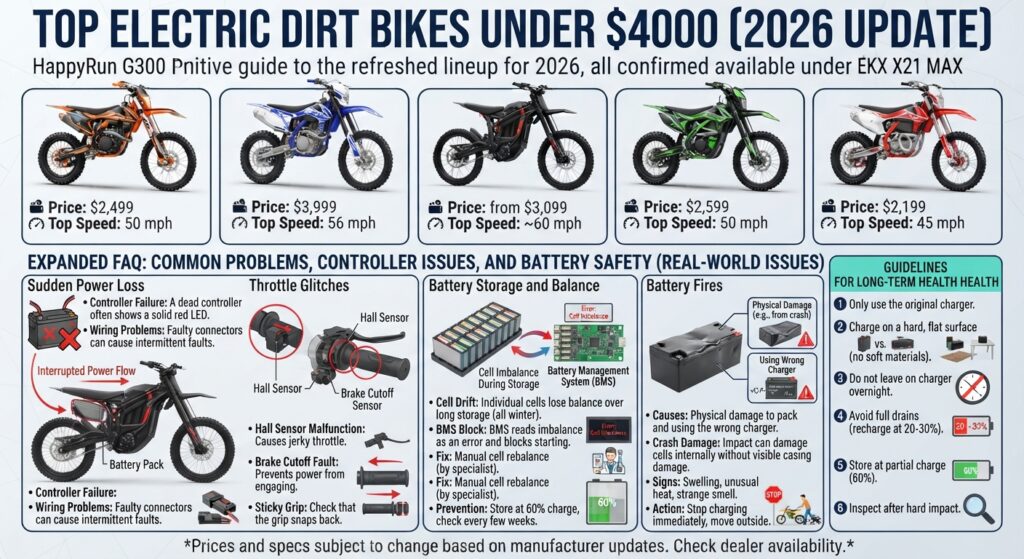
Budget electric dirt bike forums are full of real-world stories that never make it into spec sheets. Here is what riders are actually reporting, and how to avoid the same headaches.
1:Why did my bike suddenly lose power with a blank display?
This is one of the most reported issues on Sur-Ron and Talaria platforms, since both bikes share very similar electronics. Riders describe the bike cutting out mid-ride with no dashboard light at all, even though the battery still shows a full charge when tested separately.In most reported cases the culprit is the controller, not the battery. A dead controller often shows as a solid red LED with no blinking pattern. Swapping in a new controller resolves it for most riders, though a few report the fault returning within days, which points to a wiring or connector problem rather than the controller itself.
2:Is jerky or runaway throttle a real safety concern?
Yes, and riders should treat it seriously. Forum threads describe throttles that suddenly snap to full speed or drop to a crawl on their own, usually traced back to a failing hall sensor inside the throttle assembly or a brake cutoff sensor that is not resetting properly.Before riding again after any throttle glitch, check that the throttle grip snaps back to zero on its own. If it hangs up on the handlebar end or feels sticky, the controller may cut power incorrectly as a safety response, and that is worth fixing before it fixes itself the hard way.
3:Why did my battery die after sitting all winter?
Several riders in cold-climate areas reported batteries that would not power on after a bike sat in the garage over winter. The pack usually is not fully dead. The individual cell groups inside the battery drift out of balance when a pack sits unused for months, and the battery management system reads that imbalance as an error and blocks the bike from starting.The fix in most reported cases involves a manual rebalance of each cell group, best left to a battery specialist rather than a DIY fix. To avoid the problem entirely, charge your pack to around 60 percent before long-term storage and check it every few weeks.
4:Are aftermarket controller upgrades safe?
Riders are split on this. Several forum members warn that swapping in higher-power aftermarket controllers, a common mod on Sur-Ron style bikes, trades reliability for extra speed. Reports of overheating and premature failure are common with these mods, especially without added cooling.If you do upgrade a controller, keep the airflow around it clear and avoid mounting anything that blocks its cooling surface. A stock controller that lasts years is a better outcome than an upgraded one that fails on the trail.
5:What actually causes battery fires on these bikes?
Riders and repair techs who have seen fires firsthand consistently point to two causes: physical damage to the battery pack, and using the wrong charger. A genuine controller-caused fire is rare by comparison. Swelling, unusual heat, or a strange smell from the battery are all signs to stop charging immediately and move the bike outside.Lithium packs also carry real risk from crash damage that is not visible from the outside. If your bike takes a hard fall and lands on the battery, have it inspected before your next charge cycle.
6:What charging habits keep the battery and controller safe long term?
A short list of habits shows up again and again across rider forums and repair shop advice:
- Use only the charger that came with the bike: aftermarket or universal chargers can send the wrong voltage and skip built-in safety cutoffs.
- Charge on a hard, flat surface:
never on a bed, couch, or carpet, since soft materials trap heat around the pack. - Do not leave the battery on the charger overnight:
unplug within about an hour of the light turning green. - Avoid full drains:
recharge once the pack drops to 20 to 30 percent instead of riding it down to zero. - Store at partial charge:
around 60 percent is ideal if the bike will sit for weeks without use. - Inspect after any hard impact:
a crash or drop can damage cells internally even when the case looks fine.
None of this eliminates risk completely, but it removes the two most common causes riders report: bad chargers and physical battery damage.