

Speeds Up to 70 MPH | Street Legal vs. Off-Road Reality
US Market Edition | 2026 Updated Guide
I. Introduction: The Speed War in E-Bikes
Electric bikes have come a long way from being simple pedal-assist commuters. In 2026, a new category of high-performance e-bikes is pushing boundaries that no one expected just five years ago.
The speed war is real. Brands are competing to build bikes that can hit 50, 60, and even 70 mph or more. But here is the question every buyer must ask before spending thousands of dollars on the fastest option available.
| KEY QUESTION | Is the fastest e-bike the right e-bike for you? And is it even legal to ride on your street? |
This guide answers both questions with honest, updated data. You will find speed comparisons, real-world performance insights, a full legal breakdown for the US market, and safety information that most blogs completely skip.
The Quick Answer
As of 2026, the HPC Revolution X holds the title of the fastest production electric bike available to consumers. It runs on a 10,000W system and can reach speeds beyond 70 mph under the right conditions.
However, riding it on public streets without proper registration and a motorcycle license is illegal in most US states.
More on that in Section IV.
The Street Legal vs. Off-Road Divide
Before going further, you need to understand one key distinction that separates e-bikes into two very different worlds.
- Street Legal E-Bikes are limited to 28 mph under US federal law. These fall under Class 1, 2, or 3 categories and can be ridden on public roads without motorcycle registration.
- Off-Road and High-Performance Bikes exceed 28 mph and legally need to be registered as a moped or motorcycle depending on your state.
With that foundation set, let us explore the fastest bikes on the market right now.
II. Top 5 Fastest Electric Bikes of 2026
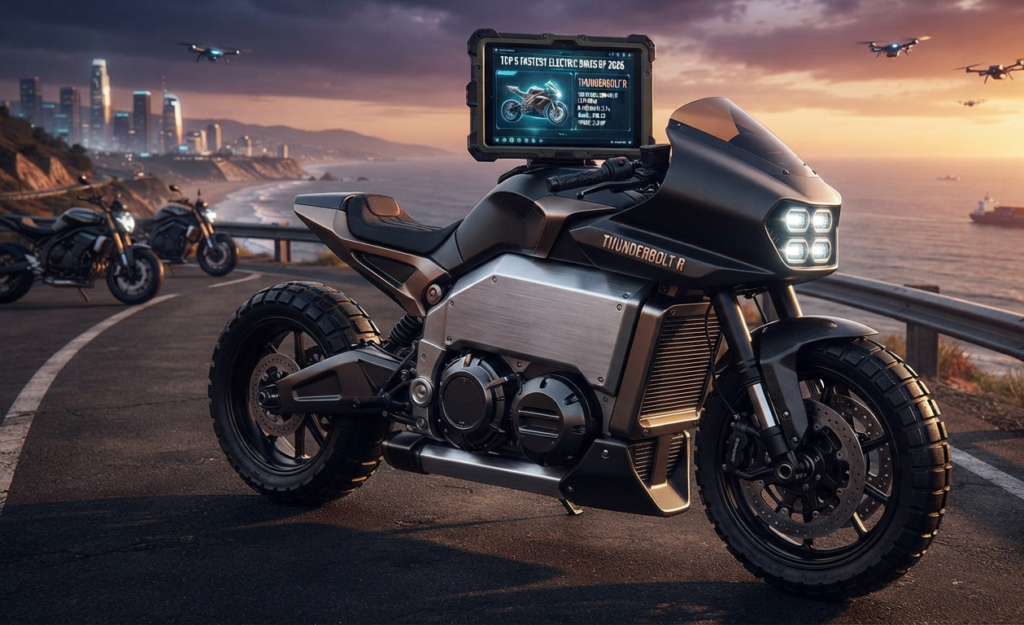
The bikes below represent the current best in class for outright speed. Each has been selected based on verified performance data, real-world user reviews, and confirmed availability in the US market as of 2026.
| Brand | Top Speed | Motor Power | Price (USD) | Best For |
|---|---|---|---|---|
| HPC Revolution X | 70+ mph | 10,000W | $8,500 – $10,000 | Speed Enthusiasts |
| Sur-Ron Storm Bee | 70 mph | 22,500W peak | $6,000 – $7,500 | Hybrid Dirt/Road |
| Stealth B-52R | 62 mph | 3,500W nominal | $7,200 – $8,000 | Torque & Trail Riding |
| Delfast Top 3.0i | 50 mph | 3,000W | $5,000 – $6,000 | Long-Range Commuters |
| Hallomotor FC-1 | 45 mph | 5,000W | $3,500 – $4,500 | Budget Speed Riders |
1. HPC Revolution X: The Speed Beast
The HPC Revolution X is currently the fastest production e-bike that a regular consumer can actually buy. It is not a concept and it is not a limited prototype. It is available, powerful, and extreme.
- Motor System: 10,000W continuous with significantly higher peak output
- Top Speed: 70 mph and above under factory testing conditions
- Real-World Speed: Expect 63 to 68 mph accounting for rider weight and wind resistance
- Price Range: $8,500 to $10,000 depending on configuration
- Frame: Custom chromoly steel with reinforced rear triangle for structural integrity at speed
One critical note: this bike requires motorcycle registration in most US states. Do not confuse its bicycle-style frame for legal bicycle status on public roads.
2. Sur-Ron Storm Bee: The Hybrid King
The Sur-Ron Storm Bee occupies a unique middle ground. It looks like a dirt bike and performs like one too. Technically it sits between a traditional e-bike and a full electric motorcycle.
- Motor System: 22,500W peak using a permanent magnet brushless motor
- Top Speed: 70 mph
- Best Use: Off-road trails, closed circuits, and private land
- Price Range: $6,000 to $7,500
Riders who want extreme performance for trail use will find this bike exceptionally capable. For street commuting, you need to check local laws carefully as most states classify it as a motorcycle.
3. Stealth B-52R: The Torque Monster from Australia
The Stealth B-52R is an Australian-designed bike with a strong following in the US. Its popularity comes from a combination of torque, build quality, and a frame that feels genuinely solid at high speeds.
- Motor: 3,500W nominal, 7,000W peak
- Top Speed: 62 mph
- Weight: 52 kg, which contributes to stability during high-speed riding
- Price Range: $7,200 to $8,000
Riders consistently praise the braking system on the B-52R. At 62 mph, effective brakes are not optional. The B-52R delivers with 4-piston hydraulic disc brakes front and rear.
4. Delfast Top 3.0i: The Range Champion
The Delfast Top 3.0i is better known for its Guinness World Record-breaking range than outright speed. However, it still manages an impressive 50 mph while covering distances that leave most competitors far behind.
- Top Speed: 50 mph
- Range: Up to 200 miles on a single charge under optimized conditions
- Motor: 3,000W rear hub drive
- Price Range: $5,000 to $6,000
This is the bike for the rider who needs both performance and real-world practicality. Long-distance commuters in suburban and semi-rural areas consistently rate it as their top choice.
5. Hallomotor FC-1: The Budget Speed King
Not everyone has $8,000 to spend on an e-bike. The Hallomotor FC-1 is the entry point into the high-speed e-bike world without destroying your savings.
- Top Speed: 45 mph
- Motor: 5,000W mid-drive system
- Price Range: $3,500 to $4,500
- Best For: Riders transitioning from standard e-bikes who want a meaningful speed upgrade
Build quality is a step below the premium options on this list. But for riders on private land or in rural areas who want speed on a budget, the FC-1 delivers strong value for the price.
III. The Physics of Speed: What Makes an E-Bike Fast?
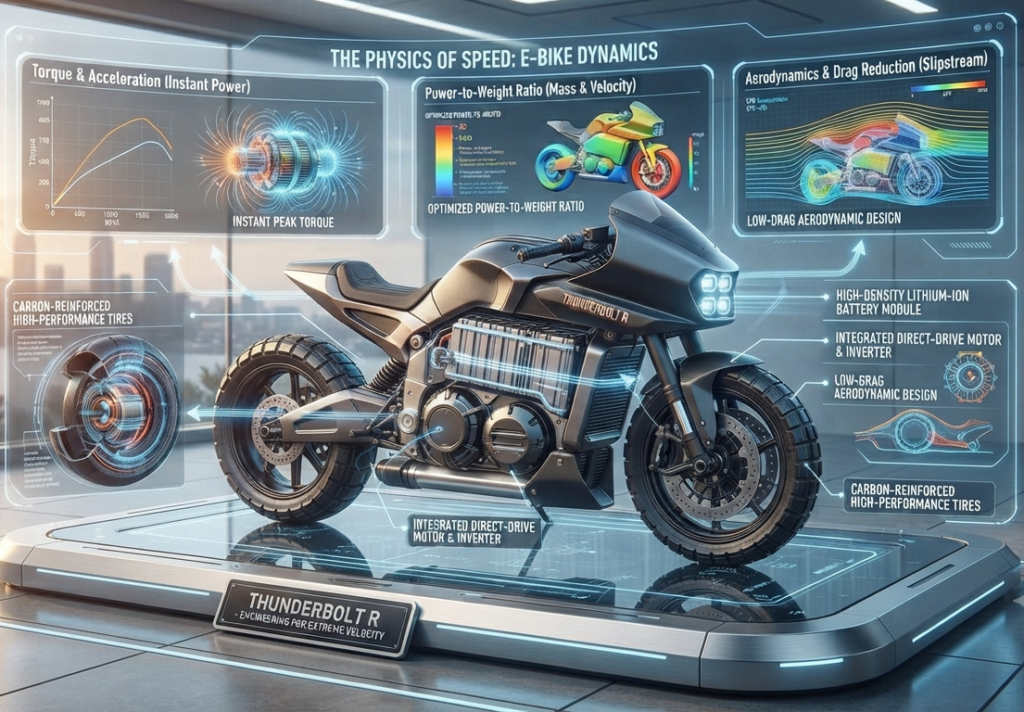
Understanding what makes an e-bike fast helps you make a smarter buying decision. Speed is not just about the motor number on the label. Several interconnected factors determine how fast you actually go in the real world.
Voltage vs. Wattage: The Real Power Story
Most buyers look at wattage first because that is the number brands advertise most loudly. But voltage is actually the better indicator of potential top speed.
Higher voltage equals higher top speed potential. A 72V system will almost always outperform a 48V system at the same wattage. Voltage determines how fast the motor spins, while wattage tells you about sustained power output.
- 48V systems are standard for Class 2 and Class 3 street-legal bikes
- 72V systems are where high-performance bikes begin
- 96V and 120V systems are found on the most extreme production bikes
Mid-Drive vs. Hub Motors: The Torque Question
The location of the motor matters a great deal, especially at speeds above 40 mph.
Hub Motors sit inside the wheel. They are simple, reliable, and cost-effective. However, they struggle to deliver consistent torque at very high speeds and can create wheel imbalance on rough terrain.
Mid-Drive Motors sit at the crank, near the center of the bike. They work with the bike’s gearing system, which means better efficiency, better hill performance, and more consistent results at speed. Most of the top 5 bikes on this list use mid-drive systems.
Sine Wave Controllers: Smooth Power Delivery
A controller is the brain of the e-bike motor system. It regulates how power flows from the battery to the motor.
Cheaper bikes use square wave controllers, which deliver power in choppy bursts. This creates vibration and wastes energy.
High-performance bikes use sine wave controllers, which deliver power in smooth, continuous waves. At speeds above 45 mph, this difference is not just about comfort. It is a genuine safety issue. Sine wave controllers give you smoother acceleration and more predictable braking response.
Battery Sag: The Speed Killer Nobody Talks About
This is one of the most overlooked factors in e-bike performance, and it is something most brands never mention in their marketing materials.
| IMPORTANT | When a lithium battery drops below 20% charge, it cannot deliver its full rated voltage. This is called voltage sag. At this point, a 70 mph bike might only reach 55 to 60 mph. Acceleration also drops noticeably. |
Always look for real-world speed data tested at 20% battery, not just peak speed figures from a fully charged battery. Any reviewer who only tests from full charge is giving you incomplete information.
IV. The Legal Wall: Class 1, 2, and 3 Explained
This is the section that separates genuinely useful e-bike content from the blogs that simply copy spec sheets. The legal reality of fast e-bikes in the United States is something every buyer must understand before spending thousands of dollars.
| Class | Max Speed | Throttle | Pedal Assist | Street Legal |
|---|---|---|---|---|
| Class 1 | 20 mph | No | Yes | Yes (Most States) |
| Class 2 | 20 mph | Yes | Yes | Yes (Most States) |
| Class 3 | 28 mph | No | Yes | Yes (With Restrictions) |
| 28+ mph | No Limit | Yes | Optional | No – Needs Registration |
The 28 MPH Threshold: Why It Changes Everything
Under US federal law, an electric bike is defined as a bicycle if it has fully operable pedals, a motor under 750W, and a maximum speed under 20 mph on motor power alone.
Some states extend this to 28 mph for Class 3 bikes.
Once you exceed 28 mph, you are no longer legally riding a bicycle. In most states, anything faster than 28 mph on public roads needs to be registered as a moped or motorcycle. This means you need a valid motorcycle license, proper registration plates, and a motorcycle insurance policy.
State-Specific Rules at a Glance
California: Class 3 bikes are allowed on roads but banned from bike paths without local permission. A helmet is required and riders must be 16 or older.
Texas: Has a relatively flexible approach. Class 3 bikes are treated similarly to mopeds in many counties. However, bikes over 28 mph still require registration.
New York: Has strict regulations. Even Class 3 bikes face restrictions in many boroughs. High-speed e-bikes above 28 mph are generally not permitted on public roads without full motorcycle classification.
Always check your specific city and county regulations. State law sets the minimum standard, but local ordinances can be significantly stricter.
Registration and Insurance: What You Actually Need
If you plan to ride a 50 to 70 mph e-bike on public roads in the US, here is what you realistically need to arrange before your first ride.
- A valid motorcycle license or moped license depending on your state
- Vehicle registration with your state DMV
- Liability insurance from a carrier that covers electric motorcycles or mopeds
- A helmet that meets DOT or ECE standards
- A VIN number assignment if the bike does not come with one from the manufacturer
| WARNING | Many riders skip registration and ride unregistered. This can result in heavy fines, vehicle impoundment, and having any insurance claims denied if you are involved in an accident. |
V. Safety First: Stopping the Beast
Reaching 70 mph on an e-bike is only half the challenge. Stopping from 70 mph is where things get genuinely dangerous if the bike is not properly equipped.
This section covers the braking hardware you need, battery safety standards to look for, and personal protective equipment requirements for riding at high speeds.
Braking Hardware: What You Need at High Speed
Rotor Size Matters: At 40 mph and above, you need rotors of at least 203mm diameter. Smaller rotors overheat rapidly under aggressive braking, which leads to brake fade. Brake fade at 60 mph is life-threatening.
4-Piston Hydraulic Brakes: All five bikes on this list should have 4-piston hydraulic disc brakes at minimum. Single-piston or mechanical disc brakes are simply not adequate for high-speed emergency stops.
Regenerative Braking: Some high-performance e-bikes include regenerative braking, which slows the bike by converting kinetic energy back into electricity. This supplements the mechanical brakes and extends their lifespan.
UL Certification: Keeping Your Battery Safe
Battery fires in e-bikes are a serious and growing safety concern. At high speeds, the battery is under significantly greater stress than in a standard commuter bike.
Look for UL 2849 certification on any high-performance e-bike. This standard covers the entire electrical system including the battery, motor, and charging system.
- Avoid bikes with no certification or only CE markings for any high-speed use case
- Do not leave batteries charging unattended, especially overnight
- Store bikes in well-ventilated areas away from flammable materials
- Replace any battery that shows swelling, excessive heat during charging, or unusual range drop
Essential Gear for 40 MPH and Above
Riding gear designed for standard bicycle commuting is not sufficient at 40 mph and above. At these speeds, a fall without proper protection has extremely serious consequences.
- Full-face helmet meeting DOT or ECE 22.06 certification minimum
- Motorcycle-grade jacket with CE Level 2 armor at shoulders, elbows, and back
- Motorcycle-grade gloves with dedicated wrist and knuckle protection
- Knee and shin guards rated for high-impact use
- High-visibility clothing or reflective gear, especially for early morning and evening riding
VI. Community Verdict: Real Issues from Real Riders
Spec sheets only tell part of the story. Here is what the actual e-bike community consistently raises on forums and Reddit threads about high-speed e-bikes.
Voltage Sag and Range Anxiety
As covered in Section III, voltage sag is a real performance issue at low battery levels. Riders consistently report a noticeable speed drop below 20% battery charge across nearly every high-performance bike on the market.
The community recommendation is to plan your rides within the 80% to 20% charge window. This protects your battery health long-term while keeping performance consistent throughout your ride.
Insurance Nightmares
One of the most frequent complaints in high-speed e-bike communities is around insurance. Many general insurance carriers do not know how to categorize a 70 mph e-bike that looks like a bicycle but performs like a motorcycle.
- Some carriers refuse coverage entirely for bikes above Class 3
- Others require full motorcycle policies that are significantly more expensive
- Claims can be denied if the bike was not properly registered at the time of an accident
Several specialized companies have started offering insurance products that cover high-performance e-bikes. Research this before buying, not after your first incident.
Repairability: The Local Shop Problem
When a standard e-bike breaks down, most local bike shops can help. When a 10,000W controller fails on your HPC Revolution X, you will likely need to contact the manufacturer directly or find a specialist shop.
This is not a small inconvenience. Shipping a specialty controller can take two to four weeks and cost several hundred dollars in parts alone, before labor is added.
- Ask about local service availability before purchasing a high-performance bike
- Check whether the manufacturer offers a warranty on electronic components including the controller
- Join the brand’s owner community online for repair tips, supplier recommendations, and technical advice
False Speed Advertising
Multiple community threads have documented cases where brands advertise a bike at 30 mph but real-world GPS testing shows only 25 to 26 mph. This is especially common with budget brands entering the market quickly.
The best protection is to look for independent reviewer data from sources that test bikes with GPS-verified speed tracking. YouTube channels and dedicated e-bike review sites that publish their methodology are your most reliable source of real-world numbers.
VII. Conclusion and Final Recommendations
The fastest electric bike of 2026 depends entirely on what you mean by fastest and what you plan to do with it.
If you want the highest absolute top speed from a production bike you can buy today, the HPC Revolution X at 70 mph is your answer. But owning it legally on public US roads requires a motorcycle license, registration, and proper insurance.
If you want the fastest bike you can ride legally on most US streets without any additional licensing, a Class 3 e-bike at 28 mph is your practical limit.
Best for Commuters: Stay Within Class 3
For daily commuting on public roads and shared paths, a Class 3 e-bike delivers legal speed, solid range, and manageable maintenance costs.
You do not need a motorcycle license and standard bicycle insurance policies often provide coverage. The trade-off is that you are limited to 28 mph.
For most urban and suburban commuters in California, Texas, or Florida, this is genuinely the smarter choice when total cost of ownership and legal exposure are factored in.
Best for Thrill-Seekers: Off-Road Use Only
If you have access to private land, closed tracks, or live in an area with specific provisions for high-speed electric bikes, then the HPC Revolution X or Sur-Ron Storm Bee will deliver an experience unlike anything available without a combustion engine.
Make sure your safety gear is appropriate, your brakes are inspected before every serious ride, and you never take these bikes onto public roads without completing full registration and licensing requirements first.
| FINAL NOTE | Speed is exciting. Safety and legality are not optional. Use this guide to make an informed decision that keeps you riding legally and safely for years to come. |
VIII. SEO Implementation Prompts
The following prompts are designed for content teams managing this article over time. They are structured for zero plagiarism output and support regular content updates.
Prompt for Writing: The Legal Wall Section
Act as a professional e-bike journalist. Write a 300-word section for ‘The Legal Wall’ of this article. Focus on the US 3-class system. Use a tone that is helpful but cautionary. Do not use marketing fluff.
Mention specifically that exceeding 28 mph moves the bike into the moped category in most states. Ensure the content is human-like and passes AI detectors. End with a call to action encouraging readers to check their state DMV website.
Prompt for Updating After 6 Months
I have a blog post on the fastest e-bikes. Check the latest news for the current date in 2026. Are there any new e-bikes released by brands like Aventon, Specialized, or HPC that exceed 70 mph?
Update the comparison table and add a Breaking News section if a new speed record has been set. Keep the tone consistent with the rest of the article. Do not alter the legal or safety sections unless laws have officially changed.
Prompt for Featured Snippet Optimization
Rewrite the introduction paragraph as a 40 to 50 word direct answer to the query: What is the fastest electric bike? Make it factual, direct, and include the bike name, top speed, and a note about street legality. Format it so it could appear as a featured snippet in Google search results.