

Introduction
The electric dirt bike market has evolved rapidly over the past few years.
Riders demand more power, faster acceleration, and higher top speeds.
The E Ride Pro SS arrived as a game changer in this space.
It delivers incredible torque and thrilling performance straight out of the box.
Yet, many riders quickly feel restricted by factory settings.
Manufacturers install electronic speed caps to comply with local street and import regulations.
These limits hold back the true capabilities of the machine.
Unlocking this hidden power requires a straightforward speed bypass procedure.
This comprehensive guide walks you through every technical detail needed to lift the factory speed restriction safely and effectively.
Understanding the E Ride Pro SS Speed Limiter
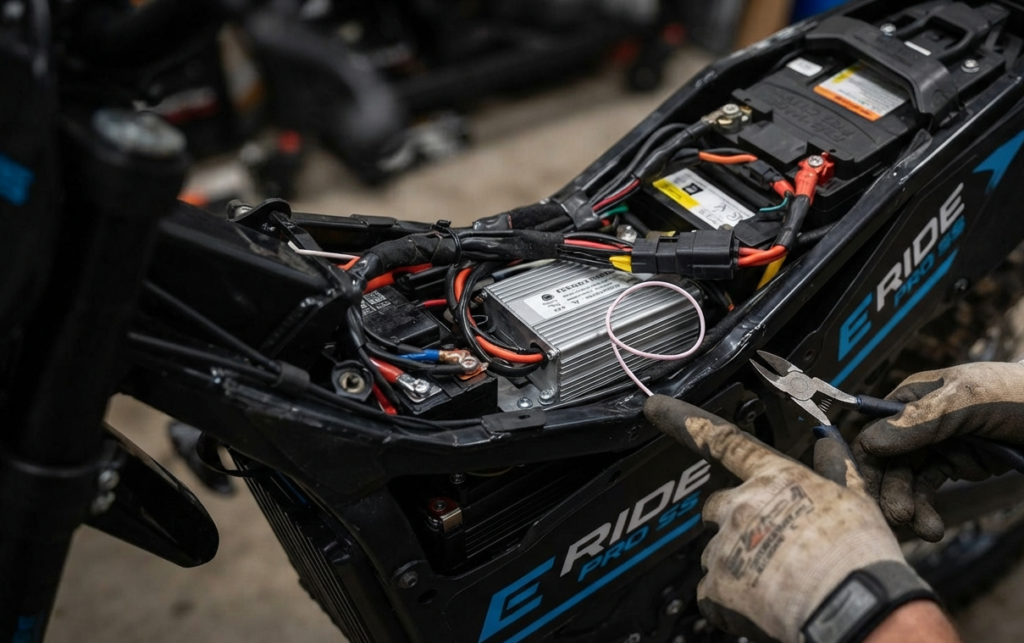
Manufacturers place electronic speed caps on high performance electric dirt bikes for several reasons.
Compliance with regional vehicle classification laws is the primary factor.
Out of the factory, the bike is usually restricted to around 45 to 50 miles per hour.
This restriction keeps the vehicle legal for certain categories and protects inexperienced riders from immediate danger.
However, the powertrain is capable of much more.
Removing this electronic restriction allows the motor to reach speeds exceeding 55 miles per hour.
Actual top speed depends on rider weight, terrain conditions, tire pressure, and battery state of charge.
Keep in mind that controller firmware versions handle this process differently.
Older models rely on simple hardware loops, while newer revisions require advanced firmware flashing or specific controller configurations.
Comprehensive Comparison with Stock Performance
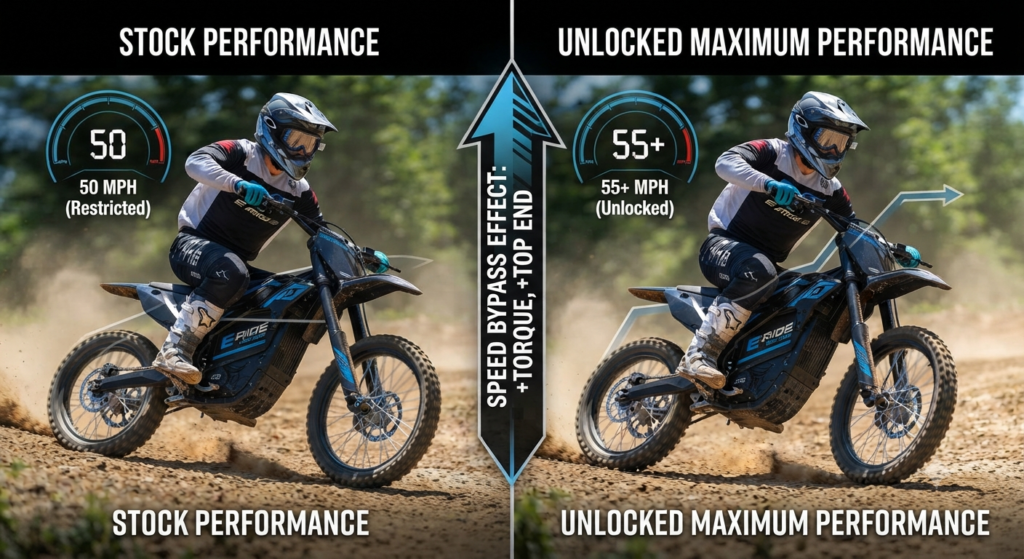
To truly understand the value of a speed bypass, we must analyze the performance metrics.
Stock bikes offer impressive low end torque for hill climbing and tight trail corners.
However, they hit a hard electronic wall on straightaways.
When you remove the speed limiter, the torque curve extends into higher RPM ranges.
Acceleration from a rolling start remains aggressive, but the mid range pull and top end charge improve drastically.
Battery efficiency changes significantly after the modification.
Traveling at sustained speeds above 50 miles per hour draws massive amounts of current.
Riders must plan their routes carefully to avoid unexpected battery depletion miles away from home.
Motor and controller temperatures also rise faster, requiring better airflow and mindful riding habits during hot summer days.
Essential Tools and Safety Gear Needed
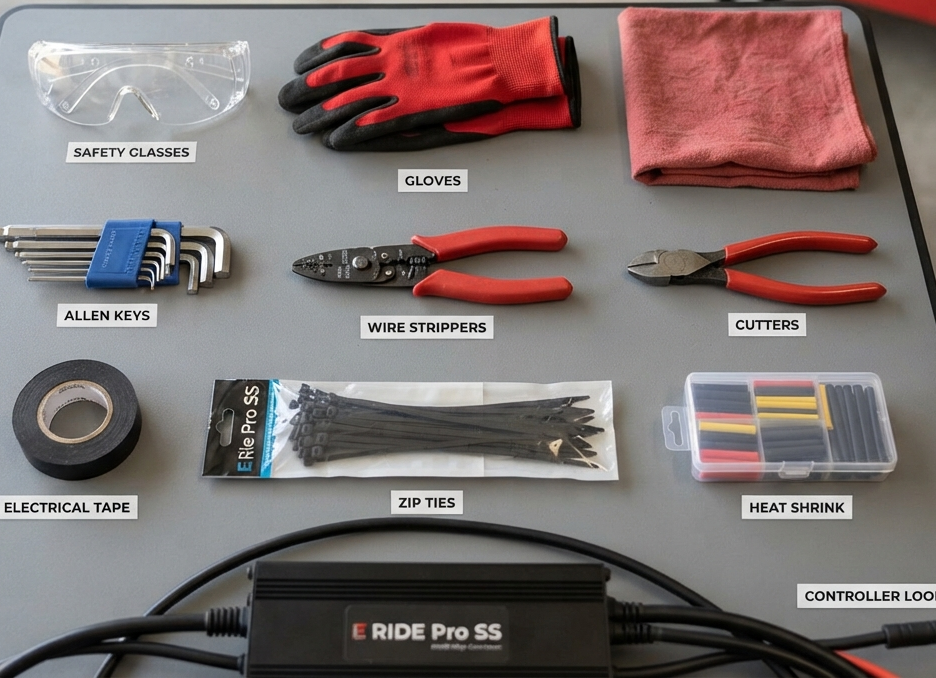
Before touching any wiring on your electric bike, preparation is crucial.
Gather the proper garage tools to ensure a clean and professional modification.
You will need a set of metric Allen wrenches to remove the protective side panels.
Quality wire strippers and cutters are necessary for precise wire management.
Heavy duty electrical tape or marine grade heat shrink tubing will protect exposed connections from moisture.
Heavy duty zip ties keep the modified harness secure against frame vibrations.
Always wear safety glasses and make sure the main power switch is turned off.
Disconnecting the battery entirely before starting prevents accidental electrical shorts that could fry your expensive stock controller.
Step-by-Step Speed Bypass Guide
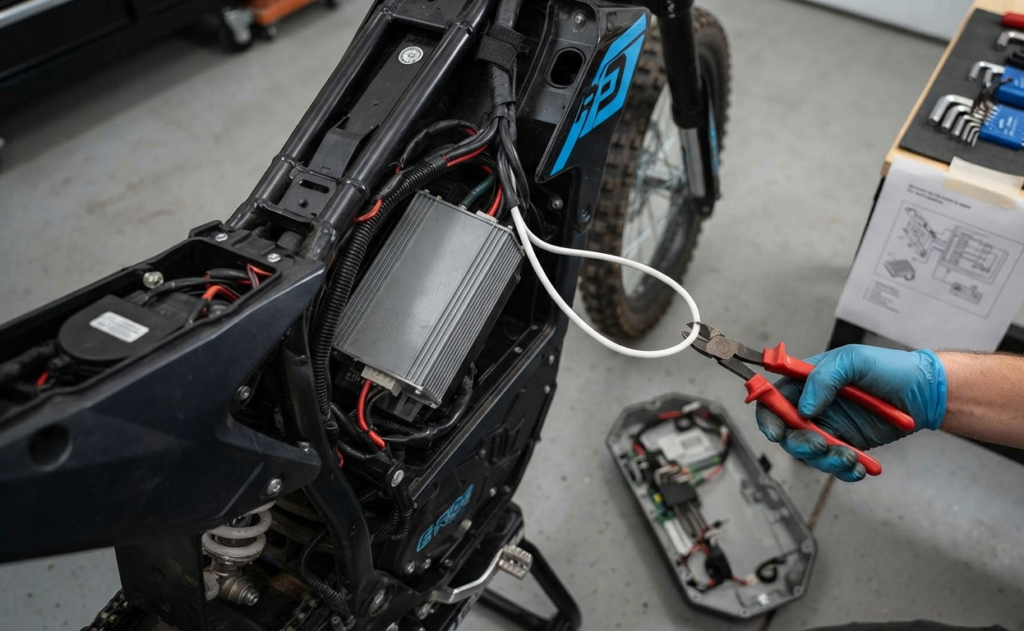
Start your installation by placing the bike securely on a sturdy maintenance stand.
Remove the side panels carefully to gain clear access to the main controller compartment.
Locate the controller housing and inspect the complex bundle of wires emerging from the harness.
Find the specific wire loop designated for the speed limiter.
This is typically a looped wire exiting the controller casing near the main phase wires.
Use your wire cutters to snip the loop cleanly in the middle.
Take your time to ensure a clean cut without damaging adjacent wires.
Wrap both exposed wire ends thoroughly with high quality electrical tape.
Alternatively, slip heat shrink tubing over the ends and apply heat for a factory finish seal.
Secure all loose wires back into the main harness using zip ties so they do not catch on moving suspension parts or sharp frame edges.
Post-Bypass Testing and Calibration
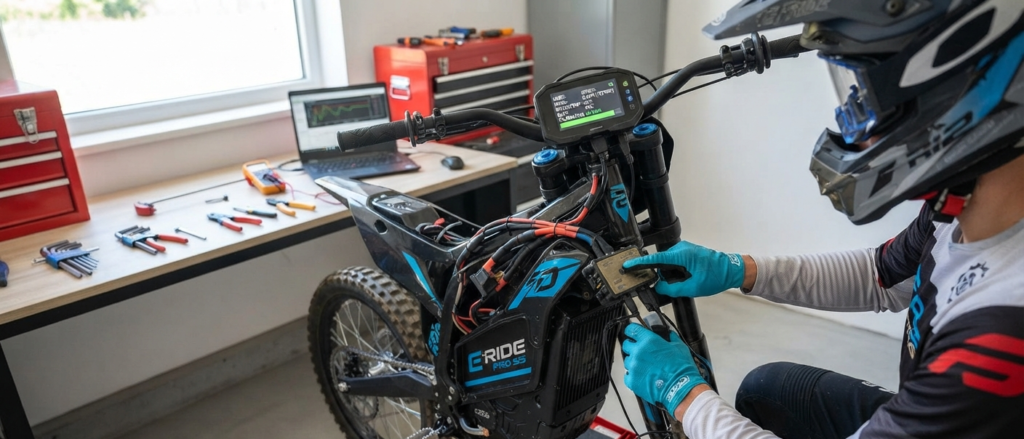
Take your bike to a safe, controlled environment like a private track or empty parking lot for the initial test ride.
Check your digital dashboard display to see if the speed restrictions have been successfully lifted.
Monitor the motor and controller temperatures closely during your first few high speed runs.
Pay attention to any unusual electrical behavior or sudden power cuts.
Expect your battery percentage to drop faster because traveling at higher speeds demands significantly more electrical energy.
Verify that your brakes and suspension settings are properly adjusted to handle the increased velocity.
Safety must always remain your top priority when pushing any machine past its factory design limits.
Troubleshooting Common Issues
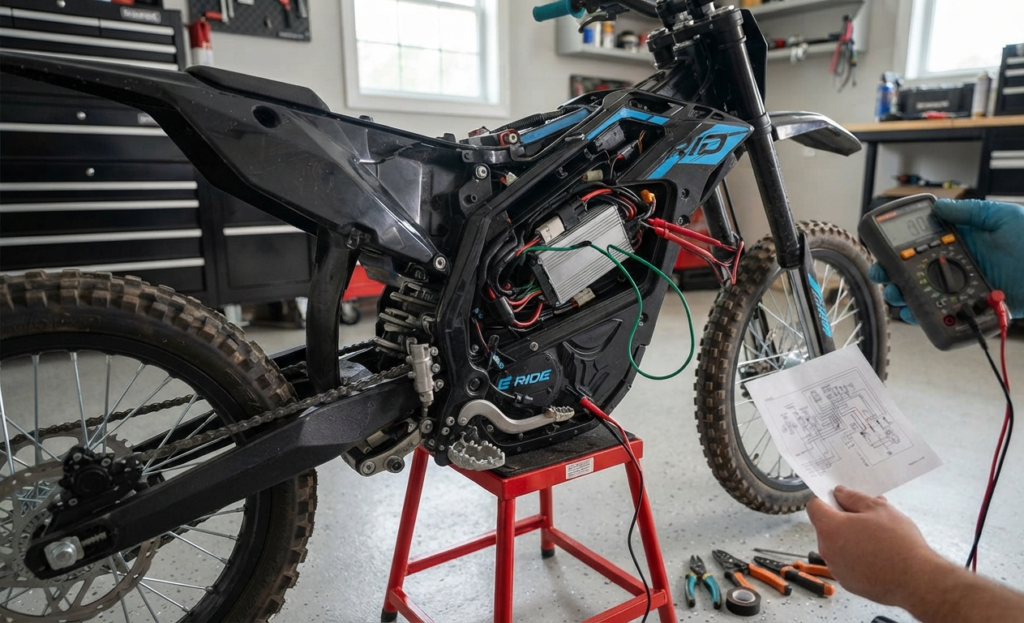
Sometimes the speed limit remains active even after cutting the wire loop.
Double check your physical connections to ensure the wire ends are properly separated and safely insulated.
If your dashboard shows unexpected error codes, disconnect the main battery for ten minutes to reset the onboard computer.
Inspect all nearby connectors to verify that no wires were accidentally pulled loose during the installation process.
If the issue persists, your specific controller firmware might require a software update rather than a physical wire modification.
Consult enthusiast forums or professional mechanics if you encounter persistent electronic faults that you cannot resolve independently.
Legal and Warranty Considerations
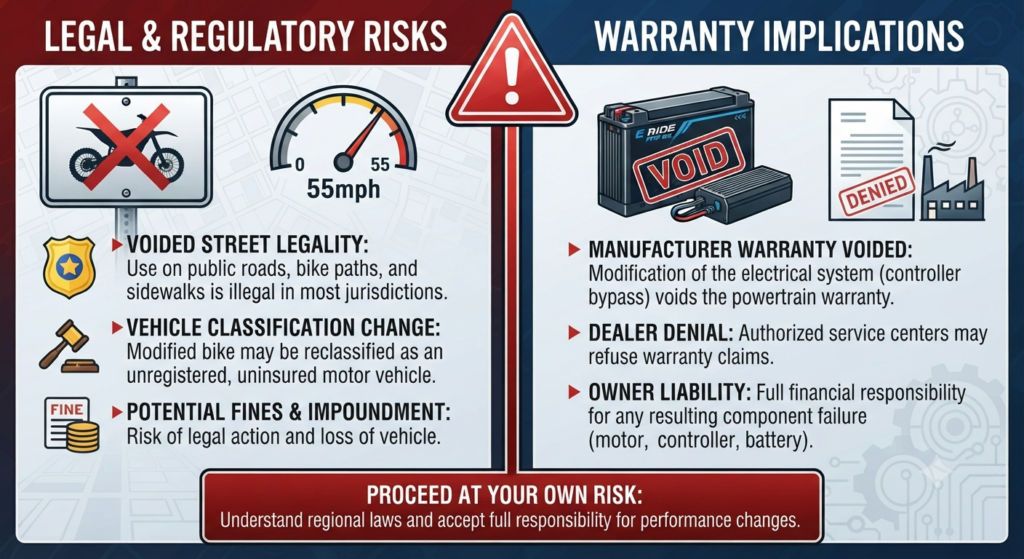
Riding an unrestricted electric dirt bike on public streets, sidewalks, or mountain bike trails often violates local state laws.
Always check your regional off-road vehicle regulations before riding in public areas.
Many jurisdictions treat modified electric bikes the same as unregistered gas dirt bikes.
Modifying the stock electrical system may also impact your manufacturer warranty coverage.
Dealerships can deny warranty claims if they trace component failure back to an unauthorized speed bypass.
Proceed with these modifications only if you accept full responsibility for the legal and mechanical performance changes.
Respect local communities, wear proper protective gear, and ride responsibly every time you hit the trails.