

Everyone loves the raw thrill of going faster.
Whether you drive a modified street car, track a weekend coupe, or ride a high end electric bike, factory speed limits always feel restrictive.
You see bold claims online about massive speed boosts from simple aftermarket parts.
However, vehicle physics is stubborn and refuses to bend easily to marketing tricks.
If you want to know how much top speed you can actually gain, you need real data.
This complete guide breaks down exact numbers, hidden costs, and smart upgrades that deliver true results without destroying your machine.
Understanding Factory Speed Limits
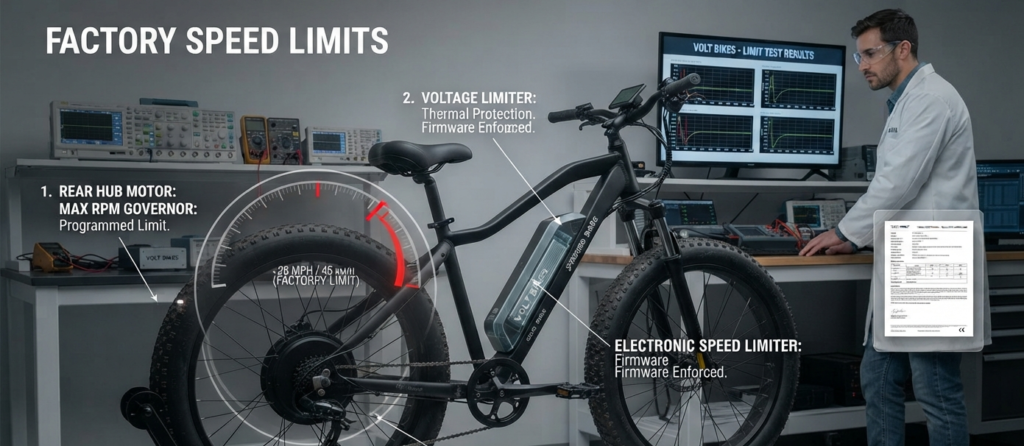
Manufacturers do not put speed caps on vehicles just to ruin your weekend fun.
Factory limits protect your vital engine components, transmissions, and tires from catastrophic failure.
Engineers design stock vehicles to balance fuel economy, long term reliability, and strict safety regulations.
An electronic speed limiter often cuts fuel or ignition when a vehicle reaches a pre set threshold.
Aerodynamic drag also plays a massive role in limiting your top velocity.
As speed increases, wind resistance grows exponentially against the body of the vehicle.
Doubling your velocity requires quadruple the horsepower just to push through that dense wall of air.
How Much Top Speed Can You Gain From Common Upgrades
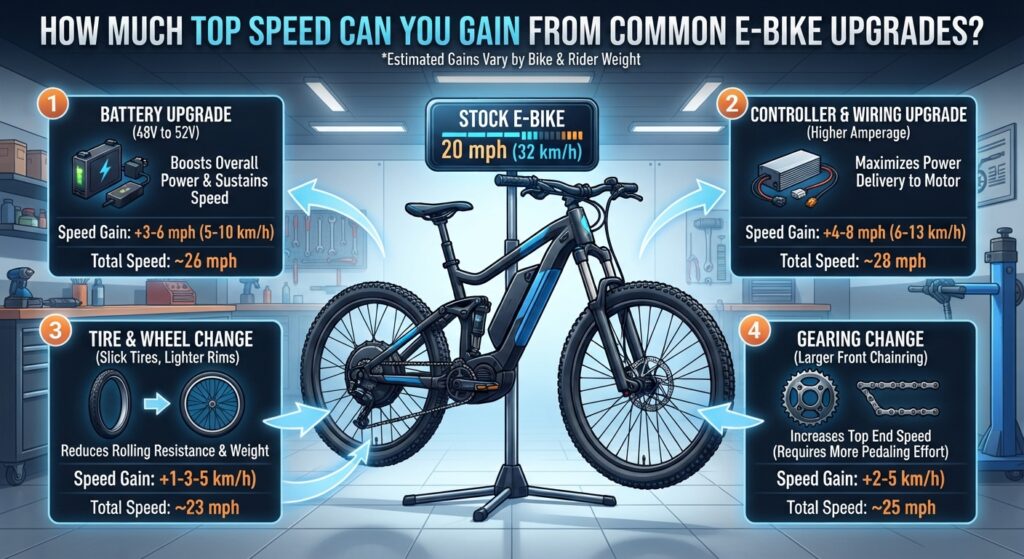
When looking at common upgrades, you will find that not all modifications are created equal.
Some parts completely transform your machine, while others just empty your wallet completely.
Software calibration is easily the single most effective way to gain true top speed.
A standard Stage 1 ECU tune on a turbocharged engine can yield a top speed gain of five to ten percent.
This usually adds five to fifteen mph by removing factory electronic speed governors and optimizing air fuel ratios.
Cold air intakes and cat back exhaust systems sound aggressive and look great under the hood.
However, they offer very little top end speed on their own merit.
You might gain less than one to two mph at absolute maximum velocity.
What they actually do is improve throttle response and help your engine reach its existing top speed much faster.
Unlocking electric micromobility options offers completely different dynamics for riders.
Unlocking a Class 3 e bike via firmware adjustments or hidden display settings can push speeds from twenty or twenty eight mph up to thirty five plus mph.
Keep in mind that electric motors are heavily bound by voltage limits and thermal thresholds.
Pushing past factory limits often requires hardware changes rather than just simple software tweaks.
Shedding weight helps tremendously with acceleration and sharp cornering agility.
For top speed, however, the gains are minimal unless you remove massive amounts of weight.
Dropping one hundred pounds from a heavy car yields an almost unnoticeable difference in final top speed on a straightaway.
The Hidden Costs of Gaining Top Speed
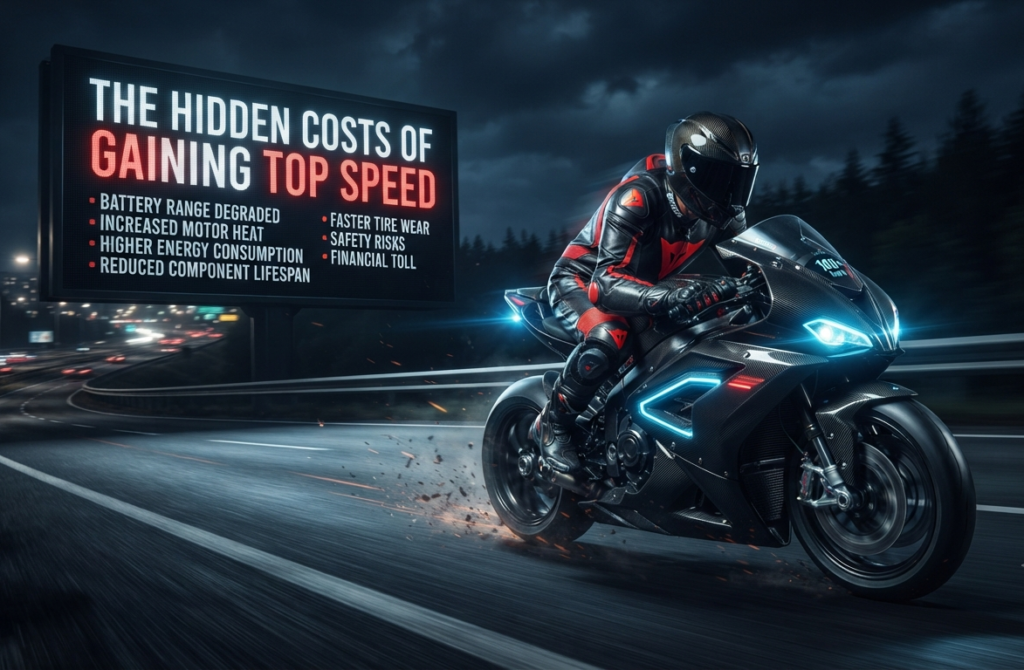
Chasing higher velocity always comes with a heavy financial and mechanical price tag.
Before you modify your machine, you must consider the major drawbacks involved.
Pushing mechanical and electrical systems to their absolute limit destroys overall system efficiency.
Unlocking an e bike to run at maximum speed can cut your battery range by thirty to fifty percent.
Gas powered vehicles experience a severe drop in fuel economy when operating at sustained high loads.
Higher speeds also mean higher RPMs, more internal heat, and greater mechanical friction.
Your pistons, bearings, transmissions, and electric motor windings will wear out much faster than normal.
Thermal throttling becomes a constant issue, leading to sudden power loss during long high speed runs.
Legal and warranty risks are another major factor to consider before turning a wrench.
Tampering with factory speed limiters often voids your manufacturer warranty entirely.
In the United States, altering street legal vehicle classifications or modifying e bikes past local legal limits can result in heavy fines or riding restrictions.
When evaluating cost per mph, ECU remaps and e bike firmware unlocks offer the best return on investment.
Cold air intakes and exhaust systems provide low value for top speed, while expensive turbo upgrades yield moderate returns for a very high cost.
Chasing top speed is an exciting journey, but it requires patience and realistic expectations.
Focus on balanced upgrades that improve your overall driving experience rather than just chasing a single high number on a speedometer.